

Club Overview
Introducing the club concept, overview, and history of Kashiwa Reysol
Club Concept
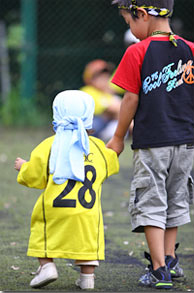
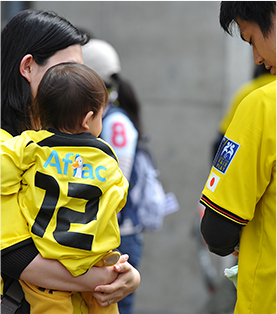
Kashiwa Reysol was born in Kashiwa and has been nurtured by all the people living in its hometown. It has been supported by warm affection, as if it were a member of the family.
We reaffirm our commitment to the word "family." We firmly believe that the path our Reysol should pursue is embodied by families who walk together, sharing the joys and sorrows of daily life while pouring love into one another. To be a member of that family, what is essential is the spirit of 'consideration' and "gratitude."
We, Kashiwa Reysol, will always cherish "consideration" and 'gratitude' as we strive to build a "strong, beloved club."
"A Strong, Beloved Club"
Kashiwa Reysol must be strong. Our mission is to always give our best and win for our families. We will continue our relentless efforts to become a world-class club representing our hometown, representing Japan, and representing Asia.
Kashiwa Reysol must be cherished. It is a club supported by familial love. We must share dreams, hopes, and inspiration together, and its existence must be supported by the entire family. To this end, we will always uphold justice and fulfill our social responsibilities.
Activity Policy: To become a "Strong and Beloved Club"
As a professional sports club, we recognize our social responsibility and, mindful of our public nature and public interest, respect diverse opinions and requests. We strive to be a highly transparent organization by ensuring timely and appropriate information disclosure.
As a symbol of our hometown and a source of energy, we will always perform at our utmost with pride and ambition, striving to become a club that soars onto the world stage.
We will maintain dignity and integrity, and through rich communication via soccer, contribute to health promotion, the sound development of youth, international exchange, and the revitalization of our hometown.
Club Keyword
Club Overview
- Company Name
- Hitachi Kashiwa Reysol Co., Ltd.
- Founding
- April 1, 1992
- Capital
- 100 million yen
- President and CEO
- Kazunobu YAMAZAKI
- Club Location
- 〒277-0083 1-2-50 Hitachidai Kashiwa City, Chiba Prefecture
TEL: 04-7162-2201 (Main)
FAX:04-7167-6166 - What is Reysol?
- "REYSOL" is derived from the Spanish words "REY" meaning "king" and 'SOL' meaning "sun," embodying the meaning of "Sun King." It combines the intensity and rigor of a champion with the warmth and approachability of the sun.
- Hometown
- Kashiwa City, Chiba Prefecture
- Home Stadium
- Sankyo Frontier Kashiwa Stadium (Hitachi Kashiwa Soccer Stadium) / Capacity: 15,109
〒277-0083 1-2-50 Hitachidai Kashiwa City, Chiba Prefecture
20-minute walk from the East Exit of Kashiwa Station on the JR Joban Line and Tobu Urban Park Line (Noda Line) - Club colors
- Yellow
- Character
- "Rei-kun"
Just as the team's nickname 'REYSOL' represents the "Sun King," the character is also designed to evoke the image of a young king. - The Club's History
- The Hitachi Soccer Club, the predecessor organization, was founded in 1940 as the Hitachi Headquarters Soccer Club. In 1986, it relocated its base of operations from Kodaira City, Tokyo, to Kashiwa City. In 1992, Hitachi Sports was established to manage and operate Kashiwa Reysol. After competing in the Japan Football League (JFL), the club joined the J.League as a full member in 1995. Aiming for community-based club management, the company changed its name to Hitachi Kashiwa Reysol Co., Ltd. in June 2000.
1993
- JFL: 5th place / Nabisco Cup: Eliminated in qualifying / Emperor's Cup: Eliminated in first round
- J.League Associate Membership
- Hitachi FC Kashiwa Reysol team name finalized
1994
- JFL: 2nd place / Nabisco Cup: First-round elimination / Emperor's Cup: Regional qualifying elimination
- Finished second in JFL, securing promotion to J.League
1995
- J.League: 12th place (1st Stage: 14th, 2nd Stage: 5th) / Emperor's Cup: Lost in the second round
- Team name changed to Kashiwa Reysol
1996
- J.League: 5th place / Nabisco Cup: Semifinalist / Emperor's Cup: Lost in the fourth round
- Nicanor named J.League Manager of the Year
1997
- J.League: 7th place (1st Stage: 3rd, 2nd Stage: 10th) / Nabisco Cup: Quarterfinalist / Emperor's Cup: Quarterfinalist
- Tomokazu Myojin, Toshitaka Ono, and Yuta Minami competed in the FIFA World Youth Championship (Reached the Quarterfinalist)
1998
- J.League: 8th place (1st Stage: 10th, 2nd Stage: 8th) / Nabisco Cup: Eliminated in qualifying / Emperor's Cup: Eliminated in the 4th round
1999
- J1 League: 3rd place (1st Stage: 4th, 2nd Stage: 4th)/Nabisco Cup: Winner/Emperor's Cup: Semifinalist
- Yuta Minami competed in the FIFA World Youth Championship (runner-up)
- Reysol Soccer School receives a letter of appreciation from the Japan Football Association for its contribution to promoting soccer.
2000
- J1 League: 3rd place (1st Stage: 4th, 2nd Stage: 2nd) / Nabisco Cup: Lost in Round of 16 / Emperor's Cup: Lost in Round of 8
- Tomokazu Myojin competed in the Sydney Olympics (reached the quarterfinals)
- Tomokazu Myojin and Hideo Kitajima competed in the Asian Cup (won the championship)
- Akira Nishino was named Best Coach; Myung-bo Hong and Tomokazu Myojin were selected for the Best XI
2001
- J1 League: 6th place (1st Stage: 6th, 2nd Stage: 7th) / Nabisco Cup: Lost in the 2nd round / Emperor's Cup: Lost in the 3rd round
- Tomokazu Myojin competed in the FIFA Confederations Cup (runner-up)
- Sota Nakazawa competed in the FIFA World Youth Championship
- Yuta Minami received the J1 Fair Play Individual Award
2002
- J1 League: 12th place (1st Stage: 14th, 2nd Stage: 9th) / Nabisco Cup: Quarterfinalist / Emperor's Cup: Lost in the 3rd round
- Tomokazu Myojin competed in the FIFA World Cup (Round of 16)
- Sang-hong Hwang and Sang-chul Yoo competed in the FIFA World Cup as members of the South Korean national team (Semifinalist)
2003
- J1 League: 12th place (1st Stage: 9th, 2nd Stage: 11th) / Nabisco Cup: Eliminated in Qualifying Round / Emperor's Cup: Eliminated in Round of 16
- Players Mitsuru Nagata, Naoya Kondo, and Tatsuya Tanizawa participated in the FIFA World Youth Championship
2004
- J1 League: 16th place (1st Stage: 15th, 2nd Stage: 15th) / Nabisco Cup: Eliminated in Qualifying Round / Emperor's Cup: Eliminated in Round of 16
- Keiji Tamada participated in the AFC Asian Cup. Scored 3 goals
2005
- J1 League: 16th place / Nabisco Cup: Eliminated in qualifying / Emperor's Cup: Eliminated in the 5th round
- Lost consecutive matches to Ventforet Kofu in the J1/J2 promotion/relegation play-offs, resulting in the club's first-ever relegation to J2
- Yuzo Kobayashi participated in the FIFA World Youth Championship (Reached the Round of 16)
2006
- J2 League: 2nd place / Emperor's Cup: Eliminated in the 4th round
- Finished 2nd in the league under manager Nobuhiro Ishizaki, securing promotion back to J1 for the first time since 2007
2007
- J1 League: 8th place / Nabisco Cup: Eliminated in preliminary round / Emperor's Cup: Eliminated in 4th round
- First year back in J1. Achieved the stated goal of "45 points," finishing 8th in the league with 14 wins, 12 losses, and 8 draws
- Kazushige Kirihata selected for Japan's U-20 national team roster for the FIFA World Youth Championship
2008
- J1 League: 11th place / Nabisco Cup: Eliminated in preliminary round / Emperor's Cup: Runner-up
- Lee Jung-sung competed in the Beijing Olympics
2009
- J1 League: 16th place / Nabisco Cup: Eliminated in qualifying / Emperor's Cup: Eliminated in the third round
- Finished 16th in the league, securing their second relegation to J2
2010
- J2 League: Champions/Emperor's Cup: Round of 16 elimination
- Set a record (at the time) of 19 consecutive unbeaten matches in the J2 League. Won the title with 23 wins, 2 losses, and 11 draws, securing promotion back to J1 in just one year
- J1 League: Champions/Nabisco Cup: First Round Exit/Emperor's Cup: Round of 16 Exit/FIFA Club World Cup: 4th Place
- Won the J1 League with 23 wins, 8 losses, and 3 draws. Achieved the unprecedented feat of winning the J1 title in their first year of promotion, a first in J.League history.
- Manager Nelsinho won Manager of the Year, Leandro Domingues won Player of the Year & Best XI, Hiroki Sakai won Best Young Player & Best XI, Naoya Kondo and Jorge Wagner were selected for the Best XI.
- J1 League: 6th place/Nabisco Cup: Final Four/Emperor's Cup: Winner/ACL: Round of 16/FUJI XEROX SUPER CUP: Winner
- Won the 92nd Emperor's Cup (3rd title in 37 tournaments since the Hitachi era)
- Made club history by qualifying for the AFC Champions League and reaching the Round of 16
- Leandro Domingues selected for the Best XI
- J1 League: 10th place/Nabisco Cup: Winner/Emperor's Cup: Lost in the 4th round/ACL: Best 4
- Won the Yama-Zaki Nabisco Cup for the second time in 14 years
- Qualified for the AFC Champions League for the second consecutive year, achieving the best result for a Japanese team by reaching the semifinals
- J1 League: 4th place/Nabisco Cup: Semifinalist/Emperor's Cup: Third round exit/Suruga Bank Championship: Winner
- Finished the J1 League season with seven consecutive wins to secure 4th place. Earned qualification (playoff spot) for the AFC Champions League for the first time in two years.
- Manager Nelsinho stepped down after approximately five and a half years in charge.
- J1 League: 10th place (1st Stage: 14th, 2nd Stage: 8th) / Nabisco Cup: Quarterfinalist / Emperor's Cup: Semifinalist / ACL: Quarterfinalist
- Qualified for the AFC Champions League for the third time in two years and reached the quarterfinals
- J1 League: 8th place (1st Stage: 7th, 2nd Stage: 5th) / Levain Cup: Eliminated in qualifying / Emperor's Cup: Eliminated in Round of 16
- Takahiro Shimohira appointed head coach in March
- Kousuke Nakamura competed in the Rio Olympics
- J1 League: 4th place / Levain Cup: Eliminated in qualifying / Emperor's Cup: Semifinalist
- Finished 4th in the league, securing a spot in the 2018 AFC Champions League Playoffs
- Yuta Nakayama selected for Best Young Player Award, Kosuke Nakamura selected for Best XI
- Kosuke Nakamura and Junya Ito selected for Japan National Team
- J1 League: 17th place / Levain Cup: Quarterfinalist / Emperor's Cup: Eliminated in the third round
- Kousuke Nakamura selected for Japan's FIFA World Cup squad
- Finished 17th in the league, resulting in relegation to J2 for the first time since the 2009 season
- J2 League: Champions/Levain Cup: Eliminated in Qualifying Round/Emperor's Cup: Eliminated in Round of 16
- Manager Nelsinho, returning after a 5-season absence, leads team to J2 title and J1 promotion
- Orunga sets new league record with 8 goals in a single match during J2 final round
- J1 League: 7th place / Levain Cup: Runner-up
- Orunga wins Top Scorer & MVP
- J1 League: 15th place / Levain Cup: Eliminated in qualifying / Emperor's Cup: Eliminated in the third round
- Manager Nelsinho achieved his 200th J1 League win, becoming only the fourth manager in history to do so
- Received the Best Youth Development Club Award, given to clubs demonstrating outstanding player development
- J1 League: 7th place / Levain Cup: Eliminated in qualifying / Emperor's Cup: Eliminated in Round of 16
- Club celebrates its 30th anniversary
- Hidekazu Ohtani retires after 20 years with Kashiwa Reysol
- Masahiro Hosoya selected for Best Young Player Award
- Wins the Best Development Club Award for the second consecutive year and second time overall
- J1 League: 17th place / Levain Cup: Eliminated in qualifying / Emperor's Cup: Runner-up
- Shota Hosoya scores his first goal for the Japan national team
- J1 League: 17th place / Levain Cup: Playoff Round elimination / Emperor's Cup: Round of 16 elimination
- Players Shota Hosoya and Daiki Sekine competed in the Paris Olympics (Reached quarterfinals)
- Player Matheus Savio selected for Best XI
- J1 League: 2nd place / Levain Cup: Runner-up / Emperor's Cup: Eliminated in the second round
- Achieved significant progress under new manager Ricardo Rodríguez (J.League Manager of the Year)
- Players Taiyo Koga and Kaho Koizumi selected for the Best XI
2011
2012
2013
2014
2015
2016
2017
2018
2019
2020
2021
2022
2023
2024
2025
- Official Fan Club
- "Associates"
TEL: 0120-266765 (Toll-Free) - Shop
-
- Soccer Shop KAMO
Kashiwa Store (Reysolista Corner)
Terada Building, 2-11 Chuo-cho, Kashiwa-shi, Chiba Prefecture
TEL: 04-7166-2624
FAX: 04-7166-2291 - Super Sports Xebio
Morage Kashiwa Store (Reysol Goods Corner)
2-3 Oyamadai, Kashiwa City, Chiba Prefecture, Inside Morage Kashiwa
TEL: 04-7137-6033 - Super Sports Xebio
Seven Park Ario Kashiwa Store (Reysol Goods Corner)
1-8-1 Oshimada, Kashiwa City, Chiba Prefecture
TEL: 04-7137-7023 - Lawson
Kashiwa-Nadogaya 1-chome Store
1-7-35 Nodogaya, Kashiwa City, Chiba Prefecture
TEL: 04-7160-3763 - Lawson
Kashiwa Chuo-cho Store
1-1 Chuo-cho, Kashiwa City, Chiba Prefecture
TEL: 04-7168-2833 - Kashiwa Reysol Official Online Shop
https://www.reysol-online.jp/
- Soccer Shop KAMO
Kashiwa Store (Reysolista Corner)